Tuesday, March 3, 2015

Water, water, everywhere! But not a drop to drink!

It is time to talk about water, consumption, treatment, storage and perhaps destroy some of the myths that surround this nectar of life.  I think that I would find little argument that water is the most important ingredient to sustain life.  So why then do so many survivalists misunderstand how harmful it can be if not treated properly?  It seems that every time I turn on the TV I see some self proclaimed expert drinking urine or other suspect source of hydration.  Whats worse, is when I later see folks referencing those errors in judgement, as some reputable source.  Believe it or not, there is actually a good reason for this.

When the body is deprived of water for an extended period of time, say a day or two, it begins to go through some changes.  Everyone seems to simply state it as Dehydration but few actually go into what that means.  For starters "Thirst is not an indicator to drink water" if you are thirsty you are already somewhat dehydrated.  Thirst is your bodies way to let you know that you are about 5% dehydrated and need to satisfy that NEED as soon as possible.  Soon to follow that thirst, is irritability, and weakness.  Most people attribute this to starvation but that is not the case at all.  Additionally nausea is also soon to follow.  Nausea is the early stages of your body experiencing shock.  It doesn't know what is going on and is trying to reset the system, so to speak. At this point your judgement is getting clouded and you start to rationalize any and all reasons to drink.  You say things like "I will only drink enough to stay alive" or "It will save my life so I can get out of here and get treatment later".  Those are both rationalizations made under duress and could prove deadly.  

If you mange to gut it out and not drink suspect water then this is what you can expect.  At 10% dehydration you will experience dizziness, headache, trouble getting up or walking and an overall body weakness, pain and even tingling in the extremities.  You will also notice that your fine motor skills are fleeting and your brain is losing control of reality.  At this stage you will go back through any rationalizations to drink suspect water again.  It is getting harder to refuse these urges at this point.  Now for the sake of argument let us assume that you are strong willed, and continue to gut it out through this level of dehydration.

Next comes the 15% dehydrated mark.  At this point your vision starts to get a little fuzzy and your body is again going through a reset.  You may drift in and out of conciseness and if you have to urinate it will be painful.  Your hearing will start to fade and your skin will become numb.  You will at this point feel a small sense of panic down in your stomach  that makes you want to just run away, but you don't have the strength to move very far.   You may cry out for help but your tongue is swollen, and sticky, your throat is too dry to even swallow the very small amount of saliva that you can call up.  Your head is pounding in pain to every slow beat of your heart and then you die.  

You body's requirements for water will be increased even farther if you are running a fever.   Fear and anxiety associated with any survival situation also increase your need for water.  If you are working hard and sweating you are just dumping water from your system and will require more to replace it.  If your clothing is not proper for the environment it can also lead to faster dehydration.

Sounds romantic, does it not?   I didn't think so, so why then are people so callous about water purification and treatment?  Consider adding to all that misery with uncontrollable diarrhea or cramps and vomiting from an intestinal parasite.   I have at some point or another been through all but the worst of those stages of dehydration and ill tell you that there is nothing fun or exciting about it. Now that we have fully defined what dehydration is,  let us look at a few options to avoid it.  

For this reason it is essential to always have a plan for water. For starters you can carry much more water in your body than in your pack so make it a habit to over-drink water constantly, everyday.  If you end up in a survival situation at least you wont start out dehydrated.  The next thing to do is have a plan to get water...ALWAYS.  There are many published methods to purify or treat water but many of them are not always viable options.  Some of them are down right wrong, and completely useless.  

Water filters are usually a good option but many of them make unrealistic claims especially if you buy the cheap, made in china copy of the more reputable ones like MSR or Clearly Filtered and of course there are many more reputable manufactures of water filters that you can chose from.  These don't weigh much and you can usually find a good one in the weight class that you are looking for.  Don't forget that it is always a good plan to have a backup, just in case.  But how well do theses things really work?  Fortunately I have an answer for you.

The Norwegian School of Winter Warfare put many water myths and methods to the test, and checked them in an independent lab and I have those results just for you.  The test sample was gathered from a running stream that dumped into a marshland.  This test water was put through the various filter methods listed.  

So now let us look at the data for the test sample.  The sample was only tested for a few common pathogens but we can see from the results just how effective these methods would be for other known contaminants.  They tested ((1)Bacterial count at >391 ppm), ((2)Coliform bacteria>200 ppm) and ((3)E.Coli=95ppm).  So how did the MSR FILTER measure up they showed an improvement of  97% across all fields.  (1) 11 ppm (2) 6 ppm (3) 2ppm.  That is not bad considering the source water.  


Another method was the MASH WELL, Seep well, Indian well, Apache well etc.  Essentially it is digging a hole a few meters from the water source and allowing it to seep full from the water absorbed into the ground medium.  In all three areas this produced 0% improvement over the test water. I have seen this method used by some experts and all I can say is the lab results don't lie.  Luck was on their side if they didn't get sick from it.  


SAND FILTER, Which was just a bucket of sand with a drain hole in the bottom suspended above another container to collect the sample filtered water.  There was also a thin piece of cloth over the drain hole to prevent the sand from running out.   Results (1) 161 ppm 58% (2) 145 ppm 28% (3) 78  ppm 18%.  Not too good for a "proven" method of filtration.


TRIPOD FILTER, Which consisted of a three tier progressive filter of various media starting with grass and moss, dripping into sand, dripping into charcoal, and lastly into the container for the sample.  The result (1) 253 ppm 35% (2) 118 ppm 41% (3) 0 ppm 100%.  That was unexpected.  It appears that charcoal is very effective against  E.coli.


That was it for the filters but next time I will talk about other purification and sterilization methods to make that life giving water safe to consume in an emergency.  Remember to comment below and add your suggestions and experiences.

For a very thorough article on water purification my good friend Robert Munilla at PracticalSurvivor.com has a great series that you should go check out HERE. He discusses many of the methods listed here and some insightful information that goes well beyond the scope of this article.

LAST BUT NOT LEAST:  Big thanks and shout out, to the Norwegian School of Winter Warfare, NATO SERE Instructors Course Cadre.  The most professionally run school that I have ever attended.  Big thanks for the photos and the training, the good times and the horrific.  

Be Well, Norseman

Monday, March 2, 2015

Tops Knives HOG 4.5

I know that I have mentioned a couple of times that I have a blade out with Tops Knives.  I have never put it up here because quite frankly, I have been too busy using it.  I thought that I would take the opportunity to show you what I have been talking about...


When Tops first unveiled this blade at the shot show Mike Fuller asked me to write up a little piece on the creation of the blade design and how it came to be.  The write up ended being longer than expected but then, so did the development of the blade.  I don't believe that there is such a thing as a "perfect" survival knife.  Everybody has their preference and that is the way it should be.  This is designed for my preference and the ways that I use a knife.  Not everyone will agree with that, but I have not heard any complaints and this blade has been on the market for some time.  I have put a link to a review of it on YouTube because it doesn't make much sense for me to review my own knife design.  That just seems a little biased and egotistical to me.  


HOG 4.5 Designed by: Gunnery Sergeant David "Norseman" Williams

The History of the TOPS HOG 4.5 
HOG is a name earned by a certified US Marine Scout Sniper. HOG means Hunter Of Gunmen, because we hunt men with guns. We HOGs are a force multiplier for any commander that chooses to employ us. 

The design for this blade started somewhere in my history that I cannot fully trace. It began in the early years of my career as a young Marine Infantryman. After spending days or weeks at a time in a field environment it seemed that my hands would always ache. I eventually traced this pain back to the blades that I was carrying and using. The Tacti-cool handles on those blades all had rough edges and sharp corners. Sure they were mean to look at and gripped like a gator but they didn’t have the comfort that I needed for sustained field use. After this realization I set out to design the best knife handle that I could in my limited experience. Little did I know at the time, this would take the better part of my career to complete.  

I started with a piece of wooden closet rod and carved in the features that I most liked in many of the knives that I have used. I kept this in my pack for a long time and modified it with a piece of sandpaper as I discovered new ways to use a knife. Whenever one of my field knives earned me a hot spot I grabbed that little handle mock up and made a subtle change so that it did not irritate that hot spot. This went on for many years and many times this piece was over worked and restarted new. Eventually I had the handle shape that worked wonderful in my hand. So I looked to buy a knife that had a handle close to the one that I had designed. I found one and set out on the next phase of simply using the blade as much as possible while making subtle changes to the handle. This also led to my developing a greater understanding of how to use a knife to accomplish field tasks while also conserving energy. With the handle done I realized that there was another problem brewing. 

The blade designs were just not up to the task that I needed them for.  Some of the better shapes were too thick and some too flimsy. Some had bad edge geometry that would just not hold the keen edge needed for a good field knife. This continued through out many years and on to my instructor position at the 1st Marine Division Scout Sniper School. I was fortunate in that I was the primary instructor for survival, fieldcraft and combat tracking. This gave me the opportunity to sample many, many knives that my students had in their kit. Believe me, Snipers love knives like coyotes love meat. In doing this I developed an attraction to wide blades with keen edge geometry. The problem was that there were not any available that I could find that would meet both my blade and handle requirement. Not that I was the expert but I knew what I needed and that was good enough for me. So now, I was armed with this Ideal field knife that does not exist. So I set out to make this knife exist. 

 I made a wooden knife from start to finish and carried that in my pack everywhere so every time that I had an issue with whatever knife I was carrying, I could sand my wooden blank to remedy it. Some Marines thought that I was crazy being a Marine Sniper in the field with a wooden knife in my pack. I just claimed that I was doing research and development, that usually quieted the cries of wanna-be and mall ninja. Never the less I continued to refine the design. Occasionally I would over work the handle and have to start again with a fresh model. Fast forward a few deployments and I landed a job at the Mountain Warfare Training Center as the SNCOIC of Mountain Survival and Mountain Scout Sniper Courses. Of course that meant lots of field time.

 In order to be a qualified red hat you have to complete winter and summer mountain leader courses and that means practically living on the mountain. I continued to refine the design until I could think of no more refinements. Then, one time on the mountain while skinning a rabbit I set my knife in the snow and the knife disappeared. Already half starved there was no way that I was going to dig down and retrieve it so I went back to the drawing board with my knife design. I wanted a way to retain my blade and not have to have six feet of dummy cord attached to it. That is when the hole was born.  I made the hole big enough to handle a standard issue carabineer so that it could be clipped to my gear rather than set on the ground when working. It is a bad ideal to put a bloody blade back in the case while skinning game, if you do, you will only do it once after you learn that lesson. This worked well and eventually I discovered many uses for that hole. But I don’t want to get ahead of myself here.  

When I thought that I had the design about as good as I could make it I sent it, and a larger version of it, to my good friend and mentor Ron Hood. I had asked for his opinion on the overall design, and I asked him if he could find any obvious flaws in the design that I may have overlooked. Ron never got back to me as he was busy with his new magazine and all the other projects that he had going on. So I let the issue rest. At first I figured that Ron must not have liked it, but then I realized that if he didn’t then he would say so. I have never known Ron Hood to sugar coat anything, perhaps that’s why we got along so well, it is comforting to know people that can handle the truth. 

Well much to my surprise I soon received a package in the mail. The package was from Ron and it contained two complete knives of my design, rendered exactly as I had designed them. I immediately called Ron to thank him and scold him for such a wonderful gift. He told me that since I designed theses knives over many years for how I use a knife then his opinion was irrelevant. So he had them made by Luke Swenson so I could take them to the International SERE Instructors course winter portion in Elverum Norway. So I did just that. 

For three weeks in that portion of the course I traveled all over the Norwegian country side, on skiis and homemade snowshoes. The knives provided me with shelter, fire, water, food, and the ability to craft practically anything that I needed to survive. Most importantly, they did not create hot spots or blisters on my overworked hands. My instructors and fellow students admired the blade and my ability to use it effectively for survival tasks. Back home on the mountain it served me well for the remainder of my tour. It is still to this day my favorite blade and you will rarely ever find me without some version of it on my belt.  

The beautiful lines of this knife were an unintended quality that verifies the saying “form follows function.” Another important feature that I build into the knife is that the tip of the blade is lined directly in the center of the handle. This is important because it provides the user with tip awareness similar to an ice pick. For some reason the brain seems to be able to calculate exactly where that tip is, even when working blind inside of an animal carcass. This tip awareness is valuable in any combatants’ kit because you never know when you may have to transition between opening an MRE and ventilating insurgents. 

The carabineer hole in the back was never intended to be a gimmick and I don’t believe that it is. It was born out of necessity and has proved many times over that it is well worth the small patch of real estate that it occupies in the handle. I discovered many uses for that little hole over the years. It makes a great lever for almost any task requiring a little more leverage, like braking up kindling and fire straightening expedient arrow shafts when they are hot. I have broken the bones of small game to expose the marrow for soups. I have used it to strip small branches clear of twigs and even as a gauge to make a split piece of wood round enough to use for a bow drill. A carabineer clipped in the hole makes a stout handle extension to aid in the blades chopping power when used in conjunction with a rear pinch grip. I have used it as a pot lifter and even to pull stuck tent stakes from the frozen ground. The truth is that the hole is limitless in its possibilities and the more you carry and use this blade the more uses that you will find for it. It is, much like the Marine Scout Sniper, a force multiplier and you will be glad to have it by your side when it matters.

So there it is, love it or hate it.
  

Be well, Norseman


Sunday, March 1, 2015

What do you want?

Granted, I don't write as much as I should here, there is a reason for that.  The things I do from day to day don't seem very interesting to me, it is just my life.  However, there are very few days that I just sit around and do nothing.  From working on my truck to riding my quad, gardening, hunting, hiking, camping and just generally doing stuff outdoors.  Not to mention the ever present, KNIFE MAKING.  Seems I spend a lot more time in the Survival Hardware shop than outdoors any more.  The question is, What do you want me to write about?  Gear reviews?  Projects? Knife making? Survival Science?  I am trying to expand the blog to cover all sorts of interesting things but I don't know what my readers find interesting because I don't get much feedback.  So I am asking you "the reader"  to chime in and sound off.  let me know what you want and I will do my best to give it to you. Also remember that I have written for every single issue of Survival Quarterly Magazine.  There is a wealth of knowledge between those covers so check them out as well.  You can also get some of my products here like TOPS S.N.A.P. Kit
 and my TOPS Hog 4.5
 Don't forget to leave me a comment below!

UPDATE: Click on the post title to open its own page to enable the comments box.

Be Well,
Norseman    


Friday, February 27, 2015

My adventures in Photography!

DSLR Camers and accessories

Heilsa folks, It sure has been a while...
I recently took a trip with the "Brothers of Bushcraft" to Canada, just to have a little fun and relaxation.  What I found while there, is that my camera equipment was piss poor.

I don't usually blog about tech stuff but I don't think I have ever put a restriction on myself for what I can blog about so....here we go.   My cheap video and still cameras seemed to die almost immediately as soon as they were brought out in the cold.  Even with the 5 batteries that I had, I couldn't manage to record a full scene in the sub zero temperatures.  The other guys cameras seemed to hold up just fine and keep a charge for a long period of time.  The others all had one version or another of the modern DSLR variety so as soon as I got home I started researching them.  What I decided on was one in the upper echelon of the entry level DSLR variety.  I got a Nikon D5200 kit from Amazon and I will never look back.  Applying some of the photography training that I got as a Marine Sniper I was quickly able to take advantage of most of the major features without simply putting the camera on auto.  A few clever YouTube searches revealed some of the more advanced features and how to use them also. What I found is that I would have saved a ton of money and frustration, if I had gone this route earlier.  I cannot imagine how many great photos I would have if I had a camera like this years ago.  There are plenty of less expensive and more expensive DSLR cameras to choose from and this one just happened to suit my needs.  If you are the type of person that enjoys spending time out doors, shooting video, photos or just hunting with a lens, it is time to upgrade.  Later this year Ill be attending a guide/packer course and I cannot wait to get out there and shoot everything in sight.  Here are a couple of pictures so you can judge for yourself.  Keep in mind that this is just me running out to my backyard to show some basic capabilities of my camera.  I will learn more as I go and hopefully glean the ability to show you my adventures as I see them, not as my old cheap cameras allowed me.  

So here we go, my adventures in Photography:

This just some weeds in the yard but this level of detail can make it very easy to photograph unknown plants so that I can identify them later.


Have you ever seen a simple pine cone look so artsy?  This kind of depth can only be achieved with the right equipment.  The ability to separate the subject from the background can open all kinds of doors in the word of outdoor photography.    


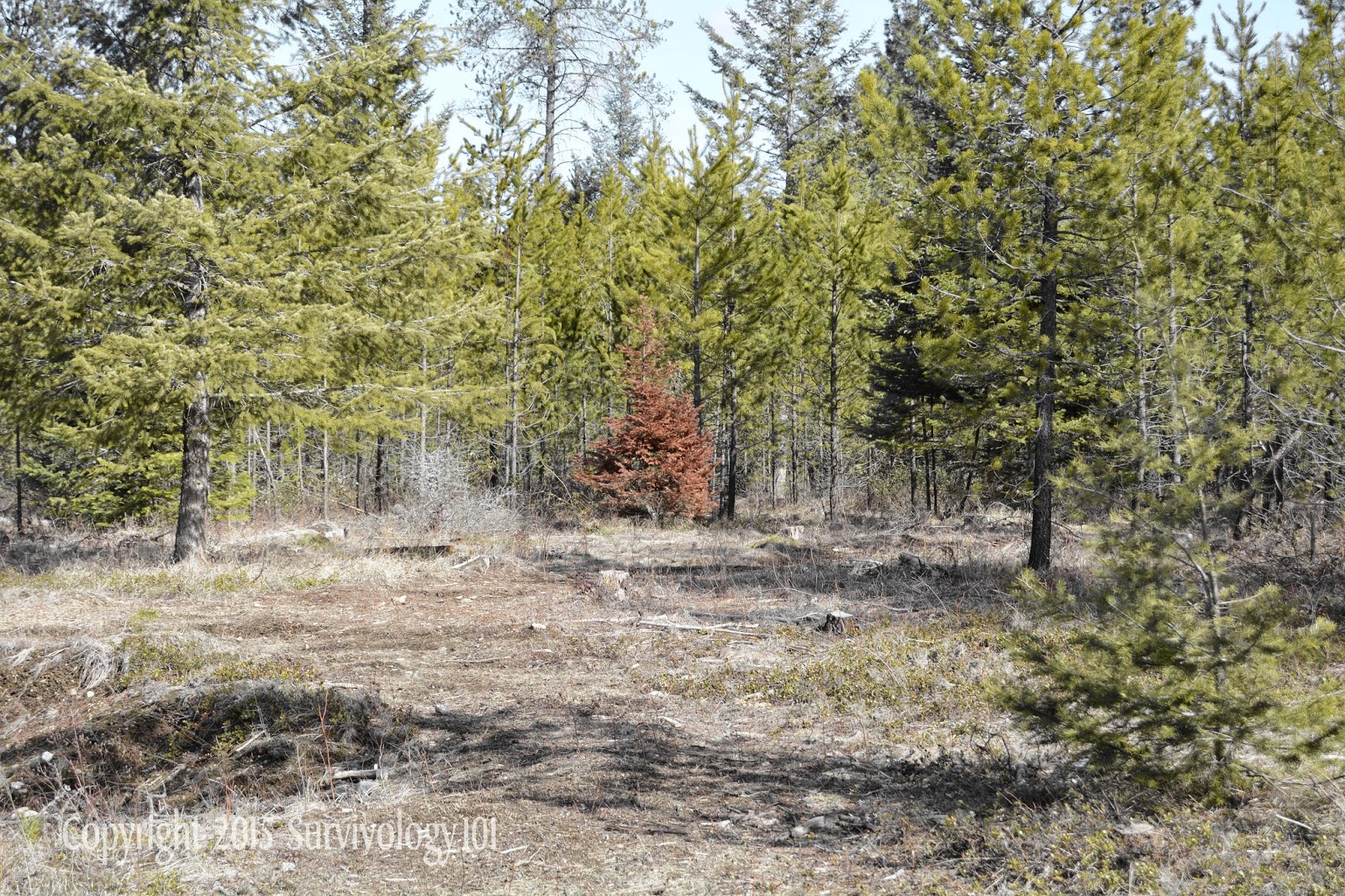
This is just a dead tree among a bunch of live ones,  Nothing special until you add a zoom lens and shoot it with the color separator function.


Now it is stunning,  what a cool feature.  I can imagine all kinds of ways to use this out on my adventures.  


These are shot with the same color separator feature used with a little more subtlety than before.  Its amazing how it draws you in.


Just a woodpile, slightly overexposed,  can you imagine what the weather is like outside?  Looks warm and sunny doesn't it?  It was actually cold and overcast...In fact we had a lite dusting of snow yesterday.  


I just included this one because I liked it,  not sure why, but it is visually pleasing to me.  


This may be the coolest feature! Below is a hand held shot with the camera on auto and the popup flash engaged, taken off my front porch.  It looks like a pretty standard night shot, however, the shot below was taken just minutes later.


In this shot I put the camera on (M) manual, mounted it on a tripod and adjusted the exposure, ISO, and aperature.  It probably sat there with the shudder open for 30 or more seconds just exposing the sensor to any and all light. Now that is amazing! 


You know that I see pictures online all the time that make me wish I could do that.  I am no professional and I have almost no training.  I now understand why the photo-guru types love it so much.  It really is cool to take amazing photographs to remember your woodland excursions. 

Modern DSLR cameras come with all kinds of cool accessories like lenses, filters GPS and WiFi adapters and some even have it built in.  The in camera editing is just amazing.  All of the above pictures are shown exactly like they were shot without any editing, save putting on my watermark.

If you are interested I am putting a link below that you can follow and check out what is available.  I could not be happier that I finally moved up and I am sure you will be also.  everybody sees the world differently so you might as well have the ability to show it exactly how YOU see it..Right?

Be well, Norseman